
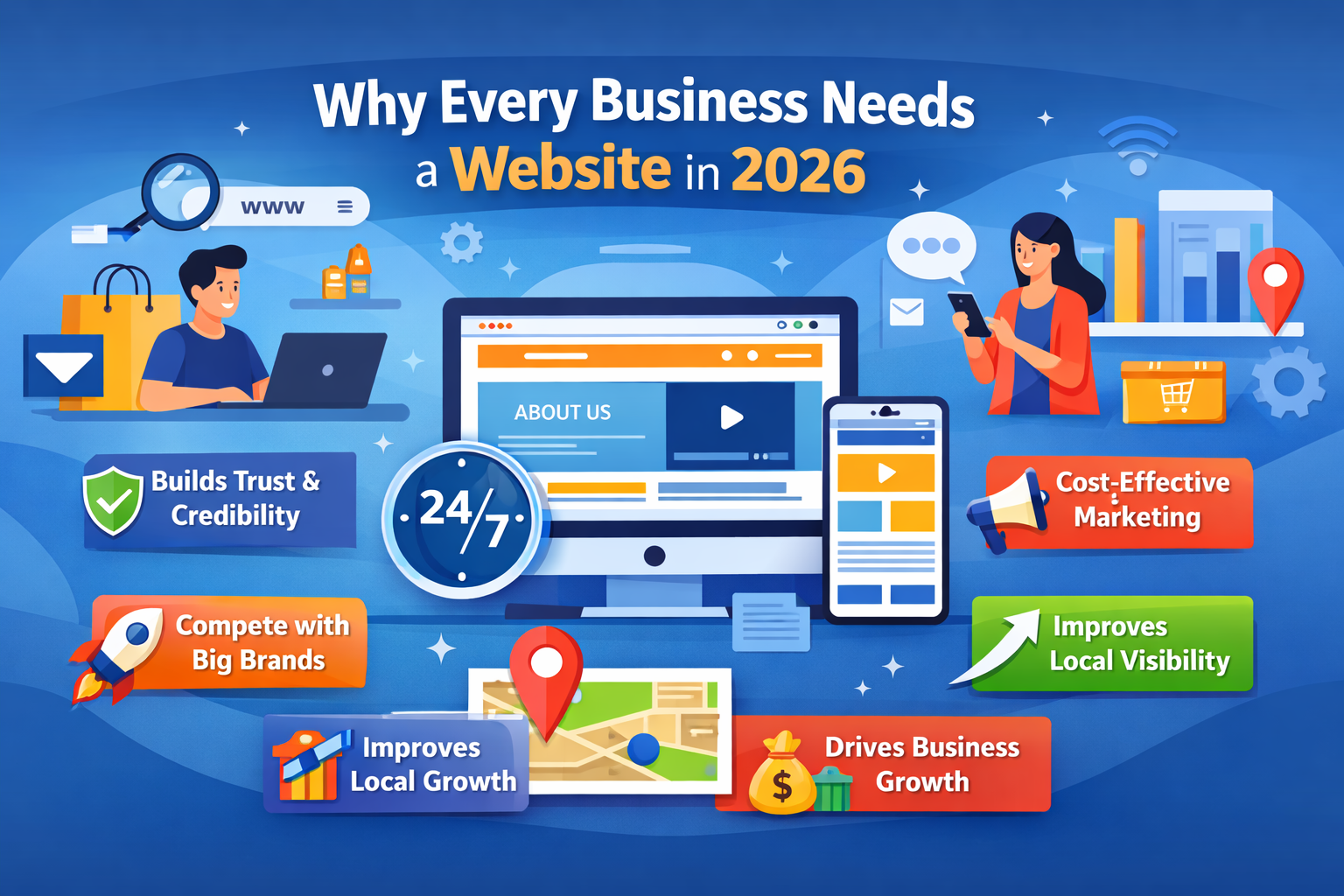
In 2026, the way customers discover, evaluate, and trust businesses has completely changed. Whether you run a small local shop, a startup, or a growing enterprise, having a professional website is no longer optional—it is a necessity. A website acts as your digital identity, available 24/7, helping customers find you, understand your services, and decide whether to trust your brand.
Let’s explore why every business needs a website in 2026 and how it directly impacts growth, credibility, and long-term success.
1. Your Business Is Online—Your Website Should Be Too
Today, most customers start their buying journey online. Before calling, visiting, or purchasing, people search on Google. If your business does not have a website, you are invisible to a large portion of potential customers.
A website ensures that when someone searches for your products or services, your business appears with complete and accurate information. Unlike social media profiles, a website gives you full control over how your brand is presented.
2. Builds Trust and Professional Credibility
In 2026, customers are more cautious than ever. A business without a website often appears unprofessional or unreliable. On the other hand, a well-designed website instantly builds trust.
Your website can showcase:
- Company details and background
- Services or products
- Client testimonials and reviews
- Certifications or achievements
- Contact information
This transparency reassures visitors and increases the chances of converting them into customers.
3. 24/7 Availability for Customers
A physical office or store has limited working hours, but your website works all the time. Even when your business is closed, customers can:
- Learn about your services
- Submit inquiries
- Fill out contact forms
- Request quotes
This constant availability helps you capture leads anytime, from anywhere, without extra effort.
4. Cost-Effective Marketing Tool
Compared to traditional advertising methods, a website is one of the most cost-effective marketing tools. Once developed, it can generate leads for years with minimal maintenance.
Through SEO (Search Engine Optimization), your website can attract organic traffic without paying for every click. When combined with digital marketing strategies, a website delivers a much higher return on investment than offline promotions.
5. Helps You Compete With Larger Brands
One of the biggest advantages of having a website is that it creates a level playing field. Even small businesses can compete with established brands online.
With the right content, design, and SEO strategy, your website can rank on Google and attract the same audience as larger competitors. Customers focus more on value, clarity, and trust—not just company size.
6. Better Customer Communication
A website improves communication between your business and customers. Instead of repeatedly answering the same questions, you can provide clear information through dedicated pages such as:
- About Us
- Services
- FAQs
- Contact Page
This saves time for both you and your customers while improving overall user experience.
7. Supports Digital Marketing and Advertising
All modern digital marketing channels—Google Ads, social media ads, email marketing—work best when linked to a website. A website acts as a central hub where all marketing efforts lead.
Without a website, advertising becomes less effective because customers have nowhere to explore your business in detail. A website allows you to track performance, analyze user behavior, and improve conversions.
8. Improves Local Visibility
For local businesses, a website is crucial for local SEO. When someone searches for services near them, Google prefers businesses with websites that provide clear location and service information.
A website optimized for local search helps your business appear in:
- Google search results
- Google Maps listings
- Local service searches
This directly increases foot traffic, calls, and inquiries.
9. Data, Insights, and Growth Opportunities
A website allows you to understand your audience better. Using analytics tools, you can track:
- Visitor behavior
- Popular services
- Traffic sources
- Conversion rates
These insights help you make smarter business decisions and continuously improve your offerings.
10. Future-Ready Business Asset
Technology and customer behavior will continue to evolve, but a website remains a stable foundation. It can easily be updated, expanded, or integrated with new tools such as online payments, booking systems, or customer portals.
In 2026 and beyond, businesses that invest in a strong online presence are better prepared for future growth and market changes.
Conclusion
In 2026, a website is not just an online brochure—it is a powerful business tool. It builds credibility, attracts customers, supports marketing efforts, and drives long-term growth. No matter the size or type of business, having a professional website is essential to stay competitive in the digital world.
If you want your business to grow, be trusted, and stay relevant, investing in a well-designed, SEO-friendly website is one of the smartest decisions you can make.